
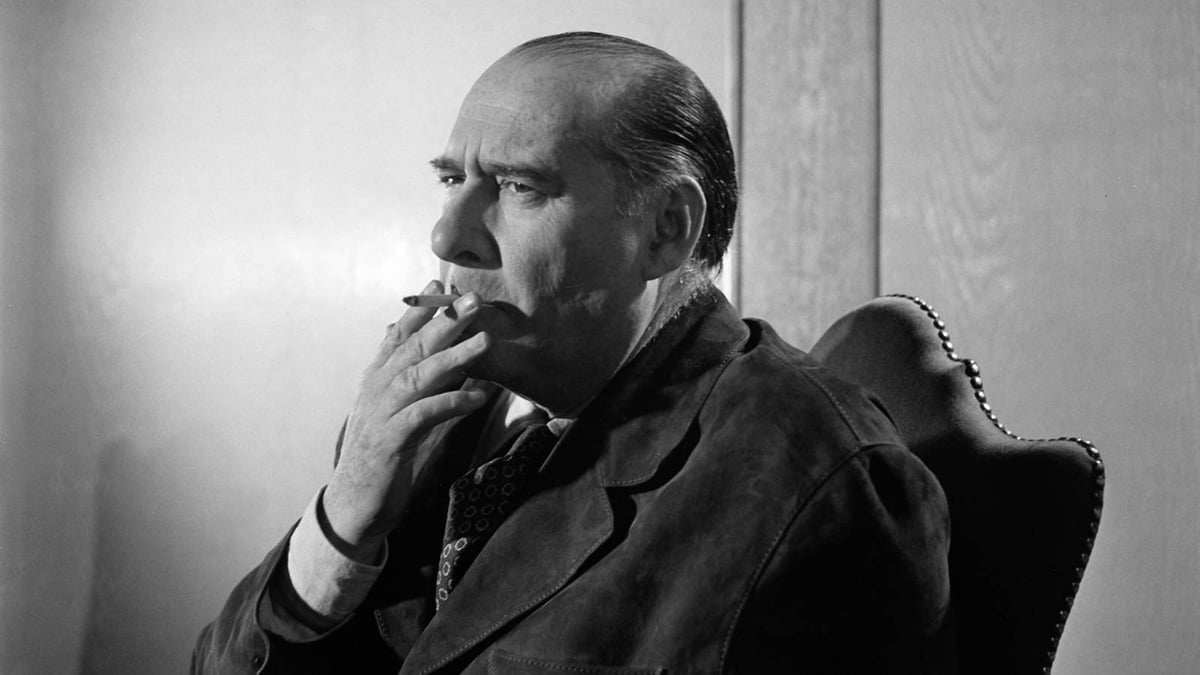
By Will Barber-Taylor
Roberto Rossellini is without question one of the truly iconic figures of 20th century cinema. A pioneer of neorealism, Rossellini’s greatest works Rome, Open City and Paisan were produced in the wake of Italy emerging from the Second World War and the fall of Mussolini’s fascist government. Rossellini had first gotten his break as a director during the war and had produced propaganda films for the fascist regime during which time he developed his neorealist style. Rossellini’s subsequent career and turbulent marriage to Ingrid Bergman has become the stuff of legend, another example of one of the great doomed Hollywood romances. Whilst Rossellini’s early career and his creative peak have been endlessly discussed and analysed, his later work has been less explored. In Roberto Rossellini: Living Without a Script, set to see its British premier as part of the 5th Cinecittà Italian Doc Season, film makers Raffaele Brunetti, Ilaria de Laurentiis and Andrea Paolo Massara focus on that overlooked part of Rossellini’s career from his journey to India to make India: Matri Bhumi in 1959 to his death in 1977.
By focussing on this part of his career, Brunetti, de Laurentiis and Massara shed new light on the complex relationship Rossellini had to film making as his career began to decline. Rossellini seemed both fixated on film making and yet had a dismissive attitude towards it – at one point he remarks that of course he can make successful films because given he had spent forty years in the industry he’d have to be an idiot to not have worked out how to make a successful film. Instead, Rossellini wants to emphasise, he is more interested in making art that he finds interesting, rather than something to simply make money. In the late 1970s he similarly declares that his mission is to “shit” upon the ideas of traditional cinema and that he considers the theatre going experience effectively dead. Yet despite this Rossellini continues to engage in filmmaking; he still wants to contribute to the process of making new movies. As his collaborator on India: Matri Bhumi Jean Herman says, “Films were like a fever, an illness.” There is a sense that Rossellini is unable to get over the bug of filmmaking regardless of how much he protests about how much he truly disdains it. His animosity to Bergman over her continued success despite his directorial failures further highlights this with the director at one-point threatening suicide if Bergman took a part in an American film by wrapping his Ferrari around a tree.
The film further demonstrates the complex relationship that Rossellini had to filmmaking by taking inspiration from the neorealist style, intersecting interviews and archive footage with reactions of how some of the key players in Rossellini’s later life felt both about him and his film making. The elegant and artful combination of materials ensures a truly immersive feeling to the film. We both feel the pain Bergman experienced at the realization that has marriage has ended and Rossellini’s frustration that his art is not being given the consideration it should. The mix of archive footage and dramatic recreations never feels stilted. Instead, the film flows perfectly with all the authority of a meticulously researched documentary and with the style of a sophisticated feature. The fine line between imagined recreation and documentary is further wonderfully blurred by Isabella Rossellini’s contribution, adding an extra personal element to the film – Rossellini’s relationship with his family is one that is often seen through a purely romantic prism but the film’s depiction of his relationship with his children, especially Renzo, is touching in its simplicity. Rossellini’s clearly cared about involving his children in the process of making his films despite, as Isabella remarks, him leaving them nothing of any personal significance. He did not, unlike Bergman, keep any letters or sentimental treasures.
The directing trio of Brunetti, de Laurentiis and Massara triumph in concocting this honest and richly complex portrait of one of Italy’s finest directors. At one point Rossellini says about film making “It’s all about ethics.” Rossellini’s attempts to grapple not just with the ethical nature of filmmaking, the point of making a piece of art that could inspire and provoke, but also with how it related to his own self image and life is one we can all understand and empathise with. To make great art is to live and to live is to make great art, the essence of cinema is the human capacity to love, to hate and to attempt to reconcile that with the very flawed and human nature of capturing any experience even on celluloid. Roberto Rossellini: Living Without A Script perfectly demonstrates how one of the greatest directors of the 20th century grappled with those very same experiences and made his art all the better for it.

