
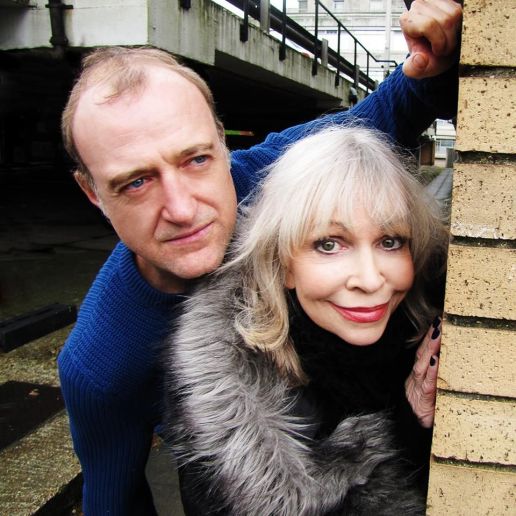
As part of the 60th anniversary of Doctor Who, I interviewed a variety of figures involved in the series about their relationship to it. One interview that was slightly delayed in being published (due to me!) was my interview with Tim Treloar, an actor best known to Doctor Who fans as playing The Third Doctor in Big Finish’ audio productions. Please enjoy this late but hopefully still fascinating interview with Tim.
WBT: The first question I’d like to ask is, when did you first realize that you wanted to become an actor?
TT: Well, when I was younger, I hated drama. I went to a comprehensive school; I didn’t like it. I got a D in my first year, I just wasn’t a performer. And then, I don’t know if something happened, I’d probably found some sort of performing instinct. Where that happened was when I was 14, there was this amateur dramatics group, local village players, and my friend and I thought, there are girls there.
And they needed players and ones who were a bit sensitive, so we thought that was our way to meet girls!
So, we joined this group, and we were basically the only ones under 70, the only men under 70. We were 14, 15, playing romantic leads to these 30 something women. So, we played these parts for four years. It was great fun. And then I went on to a bigger group. And then I start getting noticed by the local press.
And I was going out with a girl who was studying law at the time. And she said, the professionals and the greats went to drama school. So stupidly, I applied to LAMDA. And I got in, and I sold everything. I was flat broke but I couldn’t get grant from the local council. So yeah, I don’t know what happened. It was an aberration. And somehow it’s luckily worked out. Yeah, I don’t know. That’s a good question, actually. Because I don’t know. I just suddenly went, Yeah, go on. Why not?
I was working as a civil servant at the time at the Old Bailey. There was a judge there, long since dead now who was a massive theatre nut. I told him I was going to drama school, he went, “Well, you either stupid or very brave.” And I said, “I’m probably stupid!”
I was going go when I was 18. But my parents talked me out of it. And I’m glad they did, because I wasn’t mature enough to be able to go so, I went when I was 28.
WBT: I mean going at 28. That must have been interesting in terms of the other people in your year. I mean, was there much of an age difference at all?
TT: I mean, 18 to 28, there’s a big difference. A lot of them had come straight from school. Some had come from university. But there wasn’t much of a difference, you didn’t feel any real difference until you went to their houses.
When you’re working together, it’s the same with actors anyway, generally you don’t see any real difference. Age, colour, gender, anything. You’re your own little unit. It was only when I went around their flats, and they were playing computer games and stuff. And I’d done all the stuff that they were doing currently. Then I saw the age difference but otherwise not really.
It probably helped me personally because when I came out of drama school at 31, people were like, Who’s this new guy? He’s 30? What?! We haven’t heard of him. So that did probably help me a little bit.
But it was quite difficult. Beans on toast every night, I was on crisps every night, it was quite difficult. It was at that time when all your friends are starting to buy houses. And, you know, they are started getting married and things like that. That’s quite something actually. That’s something that you don’t really prepare for. The nature of it means recently graduated actors are often almost forced into poverty and uncertainty at a very crucial age.
WBT: I mean do you ever almost regret not staying on a different path at all? Or is it that you feel, you know, totally comfortable with the decision that you made to go to drama school?
TT: It crosses my mind a lot. What would it have been like if I’d stayed in the civil service, I probably would have got promoted to the executive. I just wasn’t interested. I wasn’t interested in what I was doing. Now probably, if I’d stayed on, I would have found it more interesting, I would have found my voice and I would have found my role in the service. But I was in my mid-20s. I was interested in going out, doing things that I felt I couldn’t in the civil service.
But my life would have been different. We all have those thoughts and considerations about what life could have been like. You go through what has happened to me, what would my life have been like if I’d stayed on that path? But the thing is, it is what it is. This is where a lot of the mental health struggles that come with being in the performing arts come from I think.
It is what it is. And there’s no point regretting because you can’t turn the clock back.
WBT: In terms of Doctor Who, what’s your first memory of Doctor Who?
TT: Oh, my first memory is Tom Baker. When I was a kid, I loved him. Baker’s Doctor was just wonderful. And I remember just falling in love with his Doctor and that era of the show. K9 was my favourite character alongside Leila but for different reasons.
But the problem is, I’ve mentioned this before, actually I’m not an official aficionado of Doctor Who. I didn’t know about the regeneration thing. When I watched in 1981, Tom Baker was dying and turning into this blonde bloke with cricket clothes. I just didn’t get it. And it was not Tom Baker. And so, I stopped watching because of that.
But I used to love Doctor Who, the music scared me. The title theme that really scared me when I was younger. I used to love Doctor Who and I’m actually very envious of fans to have that devotion, because I’m sure if I’d stayed with it and if I’d have known about regeneration maybe I would have continued to really enjoy it. Same as you know, all the people that are meeting at conventions etc.
For me, Doctor Who was just easy to define because he’s got a scarf, curly hair, jelly babies. And he’s a bit silly. And when the regeneration thing happened, I just couldn’t get it. I didn’t get it. I was aware of Peter Cushing and the films and Jon Pertwee, but I didn’t sort of associate them together. I just thought yeah, that was just a different actor. You know, like the Bond thing?
WBT: Now you’ve worked with Big Finish for quite a while now. When was the first time that you became involved with Big Finish and do you have any defining memories from that first production?
TT: Yes, I do. What happened was John Dorney who writes Big Finish audio and script edits them and acts for them, was at the same drama school as me. I met him at a party in a park one summer. And he said to me, you want “We’ve got to get you in Big Finish”. I said, “What’s that?” He said “Doctor Who audio dramas” and I said yes because work of course is work and my first job was with Tom Baker, it’s called Destination Nerva.
And I played a Victorian zombie lord, Lord Jack, who was after colonizing space. And I had this kind of fake voice, to sound like a believable villain, you know, that I thought was good as I got to play against type.
And Tom apparently said to Nick Briggs who was producing it that “He like sounds like someone, he, sounds like someone.” And during the middle of a taping, he went “It’s Jon. It’s Jon.” So, there we are. That’s how it all started. So yeah, my first job was very memorable and a very important one for me!
WBT: And in terms of the audition process for playing the Third Doctor, I’m guessing because of what you’ve just said that it was not at all formalized, how did it come about was it more of a conversation about would you like to play the part?
TT: Well, I was in New York at the time. And I was working with Frank Langella at the time, who was Skeletor in He Man and was Dracula.
And I got a phone call from David Richardson, one of the producers, and he said, “Look, we’re thinking of recasting the Third Doctor. It’s the first recast we’ve done and it’s a very sensitive issue. We feel enough time has passed. Would you be interested?”
I went, “Yeah, definitely!” I didn’t think about it. Because I was in New York and my agent got back to me and said “Oh, they’d like to you to record in a few weeks’ time!” I said, “Oh my God!”
And it was important that it was done in a respectful way. They had me as a narrator in the first of them and then doing The Doctor’s lines as a way of easing it in and testing out the fans’ reaction. And luckily, it was pretty good. So, they dropped the narration and 11 volumes later here we are!
WBT: You were of course involved in the production of the 50th anniversary story Light at the End and now the 60th anniversary celebrations as well, do you feel your approach has changed at all between those stories and does working in a multi Doctor story impact your performance?
TT: Well Light at the End obviously was, it was a couple of lines. I think that it was distorted? So I didn’t really think about the voice very much.
But of course, I’ve recorded with Michael Troughton as the Second Doctor and Stephen Noonan plays the First Doctor and that was a great experience, working with them.
But in terms of feeling comfortable and my performance I’m thinking, I do feel much more comfortable now. However, I still have to put a lot of work into it. Before I thought, I have to spend two weeks beforehand, playing videos in order to get into the character. I sometimes get asked if I can do the voice at conventions, but I can’t because I just need extra time to prepare to do it.
So, I have to work on it. Unlike someone like Stephen Noonan, who plays the First Doctor and who’s got a whole bunch of voices. And obviously, Jon Culshaw, the great impressionist and brilliant actor, can just slip into voices. I’m not an impressionist, unfortunately so it takes me a bit more time to be able to prepare to do it.
WBT: In terms of your favourite stories are there any that you have particularly enjoyed recording or that you particularly enjoyed the script and just really enjoyed the experience of recording the audio?
TT: Well, I’d say the Devil’s Footprints was fantastic, I love that one. I love the fact that a lot of the Third Doctor’s stuff is on Earth. I love evoking that sort of early 70s, late 60s, period.
That one and The Return of Jo Jones. The last episode of that was very moving. It was very poignant for Katy. So that was that was very special. But yeah, I love doing them all to be honest. We just have such fun making them to be honest.
WBT: You’ve mentioned that you don’t seek to impersonate Jon Pertwee, that you’re not an impressionist. But I mean, are there any elements that you feel are different in the way that you play the part to Jon Pertwee and any similarities and in terms of how you approach the part and play it? Is it kind of like a 50/50, that there are certain elements that you feel you have to adopt from the way Pertwee played the part and then the other parts where you feel you can experiment a bit more and bring more of your own style to it?
TT: That’s a great question. Well, I always try to get the voice as much as I can. The depth to it and that sort of thing in the back of the throat.
But then I tried to find different timbres to the vocal quality, so I’ll try sometimes to get that depth of the voice to a deeper degree than other times. The voice has to be very low sometimes. And at times there needs to be a type of machine gun delivery, when there are three sentences in one breath. And the warmth as well, I think it’s important to get that across as well.
I do try and capture the essence of Jon. So, I’ve tried to be faithful as much as I can. But I guess if Jon was doing the recordings, he’d be doing lines slightly differently. I’m only guessing how he would do the lines. So, when I’m in the booth, I think about him, I can visualize him and his face. But I’m very, very self-critical. So, I can’t bear when Nick Briggs plays does play back occasionally. I hate it. I can’t stand it. Because I’m really working my guts off going, oh, is this is this good? When I’ve done a good take and hear it back sometimes, I think “That does sound like him.”
WBT: I mean, you obviously mentioned working with Katy Manning, you’ve worked with Katy and Richard Franklin, has working with them influenced how you played the part?
TT: Oh, absolutely. I mean, Richard, I’ve only done one with him, the first one.
But Katy, I’ve done several with and she’s so supportive and helpful and loving and giving in the studio. So, she’ll be listening, and she’ll say wonderful things like “Oh my god, I just felt a shiver down my spine” or things like that. And then she’ll do a gesture, a physical gesture. Because voice acting requires your whole body actually, it isn’t just speaking into a mic. It’s almost theatrical.
She is always great. And she gives me a lot of guidance. She’s been so supportive, and she’s given me anecdotes about Jon that really helped. Really, she’s just a wonderful human being.
WBT: So my final question is, other stuff that you’ve been doing other non Big Finish projects, is there anything you’re excited about people seeing?
TT: I’ve done a couple of films and Wolf, which is a new BBC series, I’m in four episodes of that, that’s great and well worth watching. And yeah, now it’s the waiting game.
Unfortunately, it’s been hard since COVID. And most of us, you know, 99% of us are just jobbing actors. So, yeah, we just have to wait and see.
With thanks to Tim Treloar. Make sure to check out any of the numerous Big Finish audios Tim has appeared in here and you can watch Wolf on the BBC iPlayer now here.
 The Consulting Detective