
By Will Barber Taylor
The 1960s were a watershed era for the spy movie genre. From James Bond to Matt Helm, U.N.C.L.E. to Bulldog Drummond, Harry Palmer to Derek Flint, and many others besides, a new generation of glamorous characters with an eye for danger was dominating our cinema screens.
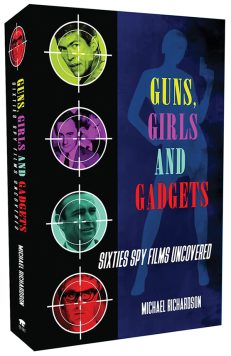
With Dr No and From Russia With Love, Ian Fleming and Eon Productions had found both a winning and successful formula and these first 007 movies inspired many other filmmakers to enter the genre and present many different rivals, imitators and spoofs of the master spy James Bond. Written by TV and movie historian Michael Richardson, Guns, Girls, and Gadgets is an indispensable guide to 50 productions which assisted in forming the 60s movie spy craze.
Cinema was changed the moment that James Bond first appeared on the silver screen. Ian Fleming’s secret agent was like no other action hero that had been seen to venture onto the big screen. In part this was down to Sean Connery’s effortless portrayal of the suave and sophisticated secret agent. It was also down to the concoction made by Eon Productions – taking the Bond of the novels and making him somewhat less vicious and more palatable for a cinema going audience.
Yet Bond wasn’t the only super spy of the 1960s. As Richardson makes clear in his book, the decade was filled with a variety of interesting and engaging adventurers who were at the time close in popularity to Bond but have now sadly fallen by the wayside. This is self-evident from the opening of the book in which Richardson details how the era of spies and action adventures wasn’t simply the story of the Bond films. Indeed, Richardson shows that whilst Fleming lit the spark for the spy genre and his character has been the most enduring Bond was far from alone – alongside him stood the likes of Bulldog Drummond and the Man from UNCLE, Matt Helm and many others. Into this mix of course where the spies whose intrigues were less glamorous. Le Carre’s Alec Leamass, played with a genuine detached disgusts for his business by Richard Burton is the antithesis of the somewhat more relaxed James Bond of the films, who does seem to often enjoy his work.
Richardson’s detailed summaries of film’s cast, crew and production team offers a truly unique insight into not just how Fleming was able to get the Bond franchise off the ground but how we managed to ensure that he had the right producers who understood his vision. Each chapter fizzles with facts. For example, in the chapter on the second Bond movie, From Russia With Love (1963), Richardson provides a detailed summary of many of the issues that occurred whilst filming. For instance, whilst filming on location in Istanbul the production team had to deal with the guide tours that were still being conducted through the Haiga Sophia. Equally the crew faced problems with hiring a helicopter for the sequence when Bond is chased by a SPECTRE helicopter – no one in Turkey was willing to let them hire a helicopter. The various highs and lows of each production are assiduously chronicled by Richardson and titbits like those I just mentioned are a core part of why the book is fascinating – Richardson ensures the making of the films are as exciting as the finished products we see on our screens.
It is for this reason that I would high recommend purchasing Guns, Girls and Gadgets – it is a highly engaging piece of writing about one of the most important genres in an era that helped define the cinematic landscape that we enjoy today.
 The Consulting Detective