
By Will Barber Taylor
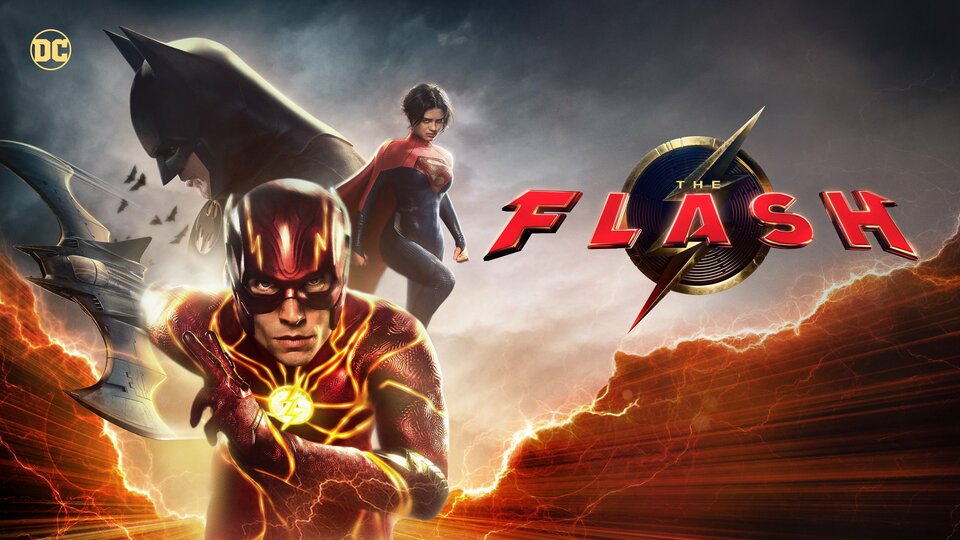
Worlds collide in “The Flash” when Barry Allen (Ezra Miller) uses his superpowers to travel back in time in order to change the events of the past. But when his attempt to save his family inadvertently alters the future, Barry becomes trapped in a reality in which General Zod has returned, threatening annihilation, and there are no Super Heroes to turn to. That is, unless Barry can coax a very different Batman out of retirement and rescue an imprisoned Kryptonian… albeit not the one he’s looking for. Ultimately, to save the world that he is in and return to the future that he knows, Barry’s only hope is to race for his life. But will making the ultimate sacrifice be enough to reset the universe?
There are films that redefine genres, that exceed all our expectations and that are frankly immersible, unforgettable experiences. The Flash isn’t such a film. Indeed, it would be generous to call it a film in the broad sense of a filmed narrative story because it fails on several basic levels. I’ll start with the few positives before getting into the meat of what’s wrong with the film. The main positives of the film is the performances of some of the actors in it.
Michael Keaton is great despite the strange introduction to his character (kitchen karate in sandals when he meets the two versions of Barry Allen whilst looking like he’s not shaved since 1992). Keaton’s Batman has always had a quieter, reflective side to him which works to the film’s advantage when he learns that the reason everything has gone wrong with his world is thanks to Barry trying to save his mother. The empathy he expresses to Allen, declaring he tried to bring his parents back through fighting crime but couldn’t, unlike Barry, is perhaps the best scene in the film from a character perspective. His pointless death doesn’t have much impact despite some resonance between him and The Flash because they’ve only known one another for about ten minutes. It is great to see Keaton as Batman again but unfortunately his placement in a what is a mess of a film feels a disservice to his interpretation of The Dark Knight. If you want to imagine what a further Batman outing would have been like for Keaton’s Batman, you’d be better off reading Batman 89, inspired by the script for the prospective third Keaton Batman film that never got made.
It’s equally nice to see Ben Affleck return to the role of Batman if only for the brief introduction to the film. In both the action sequence as Batman and in his chat with Barry before the latter goes and messes up the universe, Affleck demonstrates why under different circumstances he could had produced a great iteration of the character. His scenes are only short, but they are a tantalizing glimpse of how enjoyable an Batfleck Batman film could have been.
Sasha Calle equally does the best with what she’s given and is fairly convincing as Kara Zor El, Superman’s cousin and in most iterations of the character Supergirl. Although her screen time is limited and she is shown to be pointlessly killed in the same way as Keaton’s Batman, she clearly had potential to deliver a good interpretation of the character had she been given a better script and more screen time.
It is perhaps indicative of the film’s weaknesses that the best I can say for it is that some of the performances are good despite the rest of the film. The script and the majority of the visuals are extremely poor. The plot, diverging substantially from the text that inspired it Geoff Johns universe redefining Flashpoint, feels cobbled together from a dozen half discarded drafts and a misremembered copy of the original miniseries. That Andy Muschenttti, the director, felt that they couldn’t fully adapt the Flashpoint story as a standard feature because they wanted to go in a different direction and because he thought the audience “would appreciate” the difference is frankly laughable. Flashpoint has already previously been adapted as an engaging animated film and its plot is robust and flexible enough to make the transition to the big screen, especially given that The Flash’s actual plot, which is dry, dull and just “let’s make a hackneyed version of Man of Steel because people have seen it before” leads the film into being listless. Barry Allen and his annoying younger self journey from set piece to set piece with no feeling of a cohesive narrative structure or intent – oh let’s go find Batman – oh let’s go find Supergirl – oh let’s face Zod – oh let’s get beaten by Zod; these parts of the film as so paint by numbers that it wrecks any feeling of investment when we see our heroes fail. And that Barry can only succeed by undoing everything he did feels nowhere nearly as well executed as it did in the original comic book mini series.
The Flash’s central hero feels less of a hero and more an unfortunate intern who has had a hell of a bad time and isn’t able to fix anything that he’s broken. We should feel something throughout the film but the inability of the script to communicate basic empathy or give our characters time to develop means that we feel nothing. The performances are, as I mentioned above, the only good parts of the film but they themselves are hampered by the film being unable to fully flesh them out.
This, the paint by numbers plot and the overreliance on references and cameos shows this “experience” for what it is – a hollow attempt by a company to not make a piece of entertainment or an engaging story but produce a vehicle for selling tickets, selling merchandise, and making as much money as possible. It is by far and away the worst of the modern super hero movies to date save for Morbius. It can only be hoped that this soulless cash grab will not be remembered by anyone, save to be a warning as to what happens when you try to make a piece of entertainment that is as lifeless and plastic as the action figures that were the reason for the film being made – your film is a financial bomb.
 The Consulting Detective